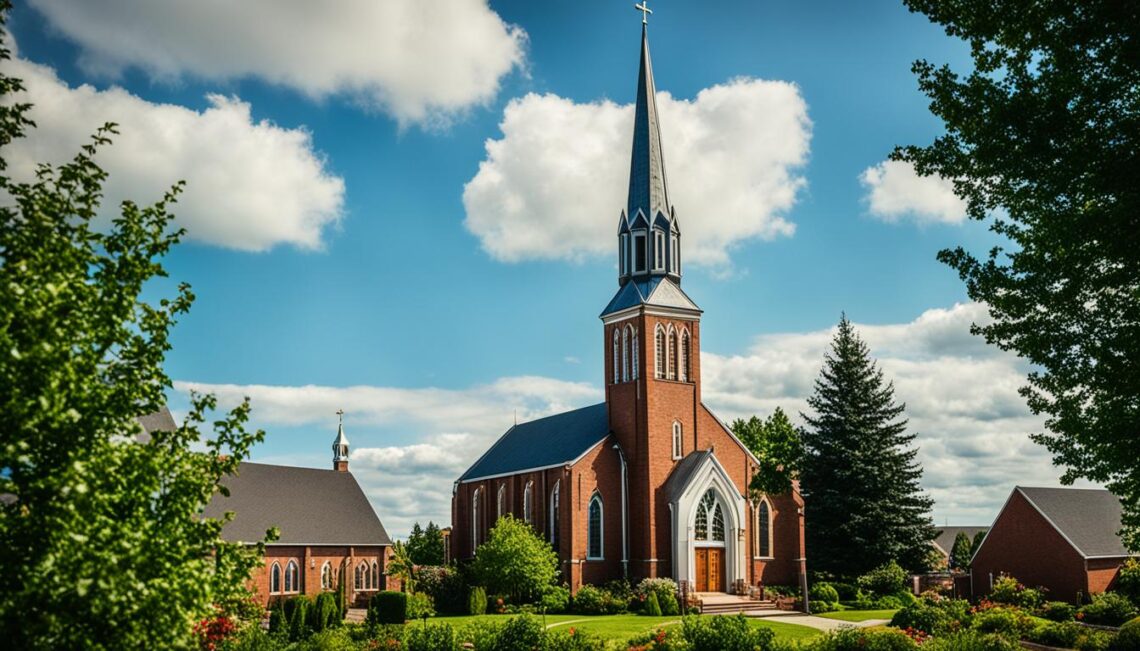
Welcome to our comprehensive church drawing tutorial! Whether you’re a beginner or looking to refine your drawing skills, this step-by-step guide will help you create a stunning church illustration. From the basic shape to intricate details, we’ll provide you with all the techniques and tips you need to create a beautiful church drawing. Let’s get started on your artistic journey!
Key Takeaways:
- Master the step-by-step process of drawing a church
- Learn easy techniques and tips to make your drawing look professional
- Focus on the basic shape, architectural elements, and intricate details of a church
- Understand shading, perspective, and adding color to enhance your artwork
- Practice regularly and seek feedback from fellow artists to improve your skills
Understand the Basics of Church Architecture
Before we begin drawing a church, it’s important to have a basic understanding of church architecture. Churches come in various shapes and sizes, but they often have common elements such as a steeple, windows, doors, and a distinct shape. By familiarizing yourself with these elements, you’ll be better equipped to draw an accurate representation of a church. Understanding the basic structure and design of a church will also help you add more intricate details later on in the drawing process.
Basic Church Structure
In order to draw a church, it’s essential to grasp the fundamental structure. Most churches consist of a nave, which is the central area where the congregation gathers, and an apse, which contains the altar and is located at the east end of the church. Additionally, churches often have transepts, which are the arms that extend out from the main nave, forming a cross shape. The basic church structure provides a solid foundation for your drawing and will serve as a guide as you add more details.
Elements of a Church
Understanding the various elements that make up a church is crucial for creating an accurate depiction. Churches typically feature a steeple or tower, which acts as a focal point and may house bells. Windows, often adorned with stained glass, bring light into the space and add visual interest. Doors provide entrances and exits for worshippers and are often intricately designed. Taking note of these elements will help you capture the essence of a church in your drawing.
Church Design
Churches display a wide range of architectural styles, from traditional Gothic designs to modern minimalist structures. Each design choice contributes to the overall appearance and ambiance of the church. Familiarize yourself with different architectural styles to better understand how to represent the unique character of a specific church. Whether it’s the pointed arches of a Gothic cathedral or the clean lines of a contemporary design, capturing the essence of the church’s design will bring depth and authenticity to your drawing.
| Common Elements of Church Architecture | Architectural Styles |
|---|---|
| Steeple | Gothic |
| Windows | Baroque |
| Doors | Romanesque |
| Cross-shaped plan | Neoclassical |
| Apse | Modern |
By understanding the basic structure, elements, and design of a church, you’ll be able to create a more accurate and visually appealing church drawing. Now that you have this foundation, let’s move on to gathering the necessary drawing materials.
Gather Your Drawing Materials
Before you start drawing, gather all the necessary materials. Having the right drawing materials is crucial for creating a successful artwork. Here are the essential items you’ll need:
- Pencils: Use pencils of different grades to create varied tones and lines in your drawing. A range of pencils from 2H (hard) to 6B (soft) will give you the flexibility to add light and dark values to your artwork.
- Erasers: Keep an eraser handy to correct any mistakes or remove unwanted lines. A kneaded eraser is great for lifting off graphite, while a vinyl eraser is better for precise erasing.
- Paper or Sketchbook: Choose a high-quality paper or sketchbook that is suitable for your preferred drawing technique. Smooth and heavyweight paper is ideal for detailed and realistic drawings, while a sketchbook offers convenience and portability.
Using quality materials will ensure that your drawing turns out the best it can be and give you more control over your lines and shading. Investing in good drawing materials is a worthwhile investment in your artistic journey.
Quote: “Having the right drawing materials can make a significant difference in the quality of your artwork.” – Artist Name
Start with Basic Shapes
When beginning your church drawing, it’s important to establish the foundation by sketching the basic shapes that form the structure. By starting with these simple shapes, you can ensure that your church drawing looks balanced and realistic.
Begin by drawing a rectangle or square to represent the main body of the church. This will serve as the framework for the rest of the drawing. Next, add a triangle or dome shape to create the roof of the church. Pay attention to the proportions to make sure that the roof complements the body of the church.
Keep in mind that these initial shapes are just guidelines and can be refined as you add more details to your drawing. They provide a solid starting point and help you establish the overall structure of the church.
Now that you’ve sketched the basic shapes, you’re ready to add more details and bring your church drawing to life. In the next section, we’ll focus on adding doors, windows, and a steeple to complete the architectural features of the church.
Add Doors, Windows, and a Steeple
Now that you have the basic structure of the church drawn, it’s time to focus on adding the architectural details that make it truly unique. Pay attention to the placement and proportions as you sketch in the doors and windows. Churches often have intricately designed doors and beautiful stained glass windows, so feel free to incorporate those elements into your drawing for added visual interest. And of course, don’t forget to include a steeple or tower, which is a defining feature of many churches.
Adding these details will bring your church drawing to life, showcasing the intricate architectural elements that make churches such remarkable structures. Take your time and ensure that each detail is thoughtfully depicted. Remember, it’s the combination of these elements that gives a church its character and charm.
Door Designs and Stained Glass Windows
Church doors come in various styles, ranging from simple to ornate. Consider the overall design of the church and choose a door style that complements it. Let your creativity shine as you add decorative elements like carvings, arches, or patterns to the doors. These details will enhance the authenticity and visual appeal of your church drawing.
“The doors of a church not only serve a functional purpose but also symbolize the entrance into a sacred space. Therefore, it’s important to depict them with careful attention to detail.”
Stained glass windows are another essential element of church architecture. They add a vibrant burst of color and light to the interior and exterior of the building. When drawing stained glass windows, you can either illustrate the shapes and colors directly or imply their presence through shading and texture. Whichever approach you choose, ensure that the windows harmonize with the overall composition of the church drawing.
The Majestic Steeple
A steeple or tower is often the most prominent feature of a church. It serves as a visual guide, pointing heavenward and making the church recognizable from a distance. Capture the height and elegance of the steeple in your drawing, paying attention to the architectural details such as spires, turrets, or decorative accents. Experiment with different perspectives to find the most visually appealing angle for your church drawing.
By including doors, windows, and a steeple, you’ll create a complete representation of a church’s unique architectural features. These details add depth and interest to your drawing, elevating it from a simple structure to a true work of art.
Refine Your Drawing with More Details
Now that you have the main structure and architectural elements in place, it’s time to add more details and bring your church drawing to life. Pay close attention to the intricate decorative elements that make each church unique. By focusing on columns, arches, and the patterns on the church walls, you can capture the essence of its design.
Take note of the different textures found in church architecture, such as the roughness of brickwork or the smoothness of stone. These textures can add depth and visual interest to your drawing, making it more realistic and captivating.
Remember to carefully observe the reference image or use your imagination to recreate the distinctive features of the church. This attention to detail will showcase your skill as an artist and ensure an accurate representation of the church’s beauty.
“The details are not the details. They make the design.” – Charles Eames
Decorative Elements
Decorative elements play a vital role in church architecture, adding elegance and visual appeal. To accurately capture these elements in your drawing, consider:
- Sketching the intricate designs and patterns found on doors, windows, and other architectural features.
- Using precise lines to depict carvings, sculptures, or reliefs that adorn the church.
- Highlighting the unique characteristics of the exterior, such as gargoyles, spires, or finials.
By dedicating time to these decorative elements, you will create a drawing that accurately portrays the grandeur and beauty of the church.
Textures in Church Architecture
Textures are as essential to architecture as brushstrokes are to a painting. To add extraordinary depth and realism to your church drawing, consider the following textures:
- Brickwork: Use short, overlapping strokes to convey the roughness and character of the bricks. Vary the pressure of your pencil to create subtle shading and highlights.
- Stone: Depict the smoothness and solidity of stone by using a combination of soft shading and crisp lines. Pay attention to the play of light and shadow on the surface.
- Wood: Create the warm, organic texture of wood through delicate hatching and cross-hatching. Capture the grain and knots to enhance the realism of your drawing.
Experimenting with different shading techniques will help you achieve the desired texture in each part of the church, highlighting its unique materials and architectural elements.
With the addition of decorative elements and textures, your church drawing will come alive with intricate details and a sense of realism. These refined details will elevate your artwork and showcase your talent in capturing the essence of church architecture.
Focus on Shading and Shadows
Shading is an essential skill in drawing that adds depth and dimension to your artwork. By mastering shading techniques, you can bring your church drawing to life and make it more visually captivating. One of the key elements to consider when shading is the shadows.
When shading your church drawing, take some time to observe the light source in your reference image or imagine where the light is coming from. Understanding the direction and intensity of light will help you determine where shadows should be placed.
There are various shading techniques you can utilize to create shadows. One commonly used technique is hatching, which involves creating parallel lines to imply shading. Another technique is cross-hatching, where you layer intersecting parallel lines to achieve a more textured shadow effect. Additionally, blending can be used to smoothly transition from light to dark areas and create a realistic shading gradient.
By adding shadows in your church drawing, you can create the illusion of depth and make certain elements appear three-dimensional. Shadows should be consistent with the direction of light and should be darker in areas that receive less light.

| Shading Technique | Description |
|---|---|
| Hatching | Creating parallel lines to imply shading |
| Cross-hatching | Layering intersecting parallel lines for a textured shadow effect |
| Blending | Smoothly transitioning from light to dark areas for a realistic shading gradient |
By strategically employing shading techniques and shadows in your church drawing, you can add depth and realism to your artwork. Experiment with different shading methods to achieve the desired effects and bring your church illustration to life.
Consider Adding Color to Your Drawing
While a black and white church drawing can be striking, adding color can bring your artwork to life even more. Consider using colored pencils, watercolor, markers, or digital coloring to add hues and tones to your drawing. Choose colors that complement each other and accurately depict the materials and surroundings of the church. Adding color will make your drawing more vibrant and captivating.
Colored pencils are a versatile medium that allows for precise control and blending of colors. They are great for adding fine details and subtle shading to your church drawing. Experiment with different pressure and layering techniques to achieve the desired effects.
Watercolor is another popular choice for adding color to drawings. With its translucent and fluid nature, watercolor can create beautiful washes and subtle variations in tone. It’s ideal for capturing the softness of the sky or creating a realistic texture for trees and foliage.
If you prefer bold and vibrant colors, markers may be the perfect option for you. They offer strong, saturated colors that can instantly grab attention and make your drawing pop. Markers are also easy to use and provide consistent results.
For those who prefer digital art, digital coloring can give you endless possibilities. With various software and tools available, you can create stunning digital paintings with rich colors and intricate details. Digital coloring allows for easy experimentation and correction, making it a flexible choice for artists of all levels.
Whichever medium you choose, remember to consider the overall composition and mood you want to convey in your church drawing. Look for inspiration in reference images or nature itself to guide your color choices. Don’t be afraid to take risks and let your creativity shine through.
Comparison of Different Coloring Mediums
| Medium | Advantages | Disadvantages |
|---|---|---|
| Colored Pencils | • Precise control and blending • Ideal for detailed work • Portability and ease of use | • Limited range of colors • Requires layering for intense hues |
| Watercolor | • Transparent and fluid effects • Soft washes and variations in tone • Versatile and suitable for different subjects | • Can be challenging to control • Requires special paper and brushes |
| Markers | • Strong, vibrant colors • Easy to use and consistent results • Quick drying | • Limited blending and shading options • Can bleed through paper |
| Digital Coloring | • Unlimited color options • Easy experimentation and correction • High level of detail and precision | • Requires digital tools and software • Steeper learning curve for beginners |
As you explore different coloring mediums, remember to practice and experiment to find the one that suits your style and preferences. Enjoy the process of adding color to your church drawing and watch it come to life with vibrant and captivating hues.
Pay Attention to Proportions and Perspective
As you continue to refine your church drawing and add intricate details, it’s crucial to pay close attention to proportions and perspective. These elements play a vital role in creating a realistic and visually appealing representation of a church.
To maintain the architectural integrity of the church, it’s essential to keep your lines straight and consistent throughout the drawing. This consistency ensures that the structure remains proportionate and accurately reflects the real-life dimensions of different elements.
When sketching the church, consider how the size and scale of each component relate to one another. Pay attention to how the doors, windows, and other architectural features align and fit within the overall structure. By accurately depicting these proportions, you’ll create a more authentic rendering.
Perspective is also key to achieving a convincing drawing. It enables you to convey depth and dimension, making the church appear three-dimensional on a two-dimensional surface. To achieve proper perspective, consider the vanishing points and the way lines converge or recede into the distance.
Remember, accuracy in proportions and perspective will greatly enhance the realism and overall impact of your church drawing.
Example:
“Perspective, as well as proportions, are fundamental in creating a believable church drawing. By keeping your lines straight and maintaining the correct ratios between different elements, you can capture the true essence of the church’s architecture.” – Jane Smith, Professional Artist
Tips for Maintaining Proportions and Perspective:
- Use a ruler or straight edge to help keep your lines straight and precise.
- Reference your subject or use photographs to ensure accuracy in proportion and perspective.
- Practice drawing basic shapes and objects from different angles to improve your understanding of perspective.
- Experiment with different techniques such as one-point or two-point perspective to add depth and realism to your church drawing.

Common Mistakes and Solutions for Proportions and Perspective
| Mistakes | Solutions |
|---|---|
| Inaccurate scaling of architectural elements. | Measure and compare the size of each element to ensure relative proportions are correct. |
| Misalignment of doors, windows, and other features within the overall structure. | Double-check the placement of each feature to ensure they align with the appropriate proportions. |
| Lack of depth and dimension due to improper perspective. | Study and practice perspective techniques to accurately create the illusion of three-dimensional space. |
| Overly distorted or exaggerated proportions. | Reference your subject regularly and use grids or guidelines to maintain accuracy. |
Add Finishing Touches and Fine Details
Once you’re satisfied with the overall structure and details of your church drawing, it’s time to add the finishing touches and fine details. These final touches will elevate your drawing and make it stand out. Here are some tips to help you add those final flourishes:
- Refine the edges: Use fine lines to sharpen and refine the edges of your church drawing. This will give it a clean and polished look.
- Add intricate patterns or designs: Use your artistic flair to incorporate intricate patterns or designs into your church drawing. This could be decorative elements on the doors, windows, or walls of the church.
- Create highlights: Use light-colored pencils or white ink to add highlights to certain areas of your drawing. This will create a sense of shine or reflection, adding depth and dimension to your artwork.
Remember, the final touches and fine details are what make your drawing truly unique and captivating. Take your time and pay attention to every small detail. Don’t be afraid to experiment and add your personal artistic touch to make your church drawing shine.
Sign and Date Your Artwork
Before you consider your church drawing complete, don’t forget to sign and date your artwork. Adding your signature is a way to claim ownership of your creation and add a personal touch. It’s also a great way to track your artistic progress over time.
Write your name and date on a corner of the drawing or incorporate your signature into the composition itself.
| Why Should You Sign Your Artwork? | Benefits of Dating Your Artwork |
|---|---|
| 1. Ownership: By signing your artwork, you establish yourself as the creator and claim ownership. | 1. Progress Tracking: Dating your artwork allows you to see how your skills have evolved over time. |
| 2. Authenticity: Your signature adds authenticity and helps prevent others from claiming your work as their own. | 2. Artistic Legacy: Dating your artwork creates a historical record of your artistic journey. |
| 3. Professionalism: Signing your artwork demonstrates a professional approach to your craft. | 3. Valuation: Dated artwork can be valuable in the art market, especially as your skills improve. |
Remember, signing and dating your artwork is a simple yet important step in the creative process. Don’t overlook this opportunity to leave your mark and showcase your talent for years to come.
Get Feedback and Keep Practicing
Once you’ve completed your church drawing, it’s crucial to seek feedback from others and continuously practice your art. Seeking feedback allows you to gain valuable insights and perspectives from fellow artists or art communities. Constructive criticism can help you identify areas for improvement and learn new techniques to enhance your drawing skills.
Art critique plays a significant role in your artistic growth. It enables you to receive valuable feedback on various aspects of your artwork, including composition, technique, and overall impact. Embrace the opportunity to learn from experienced artists and take their suggestions into consideration to refine your craft.
Remember, drawing is a skill that requires continuous practice. The more you practice, the more you develop your artistic abilities and refine your techniques. Set aside regular time for drawing and make it a part of your routine. Consistency is key to improving your skills and creating detailed and realistic drawings.
By seeking feedback and engaging in continuous practice, you can accelerate your artistic progress and unlock new possibilities. Embrace the journey of growth, challenge yourself, and always strive to push the boundaries of your artistic capabilities.
Conclusion
Summing up, drawing a church can be a rewarding and enjoyable artistic journey. By following the step-by-step guide and infusing your own creative touch, you can create a stunning church drawing that truly demonstrates your artistic skills. Remember to approach the process with patience, paying attention to the smallest details, and committing to regular practice to continuously enhance your abilities. Embrace the exhilarating experience of expressing your creativity through drawing and enjoy the journey!
In conclusion, we have explored the basics of church architecture and learned how to sketch the foundational shapes. We have also delved into the process of adding doors, windows, and a steeple to bring the drawing to life. Furthermore, we discussed the significance of refining your drawing with intricate details, employing shading techniques, and considering the addition of color. Paying attention to proportions, perspective, and incorporating finishing touches and fine details are crucial for a realistic and visually captivating artwork.
For a truly personalized touch, remember to sign and date your artwork. Seeking feedback from others and participating in art communities can provide valuable insights and help you grow as an artist. Finally, continuous practice is the key to honing your skills and creating more detailed and realistic drawings. So, embrace the joy of drawing a church, let your creativity soar, and watch your artistic abilities flourish!
FAQ
How do I start drawing a church?
What materials do I need for drawing a church?
How do I add architectural details to my church drawing?
How do I make my church drawing more realistic?
Should I add color to my church drawing?
How can I improve the proportions and perspective in my church drawing?
How do I add the finishing touches to my church drawing?
Is it important to sign and date my church drawing?
How can I receive feedback on my church drawing?
What is the best way to become better at drawing churches?

Hi! I’m David! Check my blog website! 🙂


